
Vanuatu Maritime Safety Authority
Wharf Road Roundabout,
Kumul Highway,
Port Vila, Vanuatu
(+678) 35445
© Vanuatu Maritime Safety Authority | Site by Lionfish Design Studios

Our
Contributing to a sustainable, healthy, and wealthy Ocean for a prosperous Vanuatu, People and Culture.
Our
Contributing to a sustainable, healthy, and wealthy Ocean for a prosperous Vanuatu, People and Culture.

Governing
VMSA derives its authority primarily from three core pieces of legislation:
In addition, VMSA oversees implementation of several related laws, such as the Derelict Vessels Act, the Prevention of Collision at Sea Act, and the Ports Act [Cap 26]. These statutes collectively empower VMSA to regulate the entire maritime transport sector, aligning domestic practices with international standards such as those set by the International Maritime Organization (IMO).

Our
VMSA’s core mandate is to administer, enforce, and promote compliance with national maritime laws and international maritime conventions to which Vanuatu is a party. This includes ensuring that ships and port facilities meet the highest safety and security standards, licensing and certifying seafarers, and monitoring vessel operations within Vanuatu’s waters. VMSA has jurisdiction over wrecks and salvage, marine pollution, and the provision of aids to navigation (AtoNs) and hydrographic services. It also oversees fair and equitable access to port facilities and enforces tariffs and regulations that support transparency and good governance. The Authority’s broad scope allows it to integrate domestic and international regulatory functions under one system, reducing duplication and improving efficiency in the maritime sector.
Our
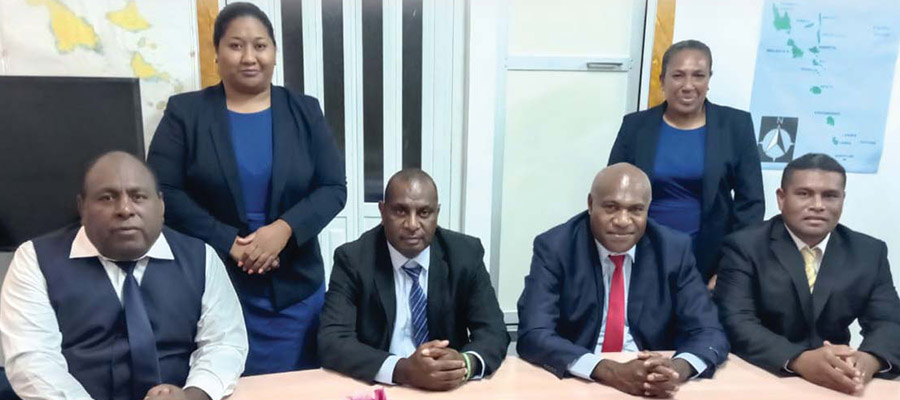
VMSA is governed by a Board comprising representatives from the Ministry of Infrastructure and Public Utilities (MIPU), the Ministry of Finance, and a third appointed member. The Commissioner of Maritime Affairs serves as the chief executive, supported by Deputy Commissioners for Domestic and International Affairs, as well as key operational managers. The organizational structure includes Port State and Flag State Officers, Inspectors, Enforcement Officers stationed across different islands, and specialized staff in areas like maritime response, hydrography, and policy. While many roles are currently vacant, the Authority is actively working to build capacity and fill critical positions. Regional offices, such as the one in Santo, help ensure service delivery and oversight reach even the outer islands of Vanuatu.
Our
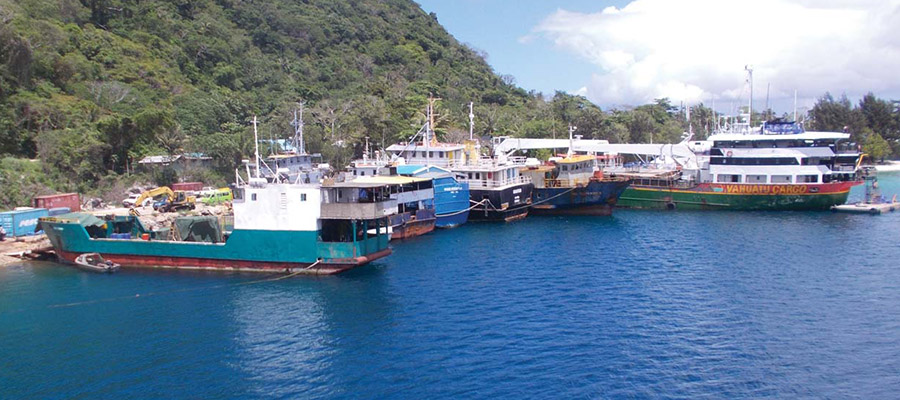
VMSA operates in a complex and resource-constrained environment. A major issue is the aging domestic fleet—over 70% of vessels are more than 20 years old, which poses safety risks and makes enforcement of safety standards difficult. Infrastructure deficits are another challenge: many domestic jetties and aids to navigation are in disrepair or beyond their design life. There is currently no comprehensive AtoN management plan or hydrography strategy in place.
Maritime incident response is hindered by limited resources, vast distances between islands, and inadequate equipment. On average, ten maritime incidents occur annually, but only a fraction can be fully addressed due to these constraints. VMSA also faces budget limitations; although it generates revenue, all funds are absorbed into the national budget and redistributed, limiting financial autonomy.
A shortage of trained maritime professionals and gaps in institutional knowledge further impact VMSA’s operational capacity. VMSA is actively working to improve training, recruitment, and strategic planning to meet these human resource challenges.
VMSA’s Corporate Plan 2024–2028 outlines a bold path forward. The Authority is committed to improving regulatory enforcement, enhancing the safety of navigation, investing in infrastructure, and strengthening port access. It will also continue efforts to ratify outstanding IMO conventions and align Vanuatu’s maritime framework with global best practices. Strategic partnerships, both regional and international, are essential to achieving these goals.
In line with Vanuatu’s National Sustainable Development Plan and National Ocean Policy, VMSA strives to build a maritime regime that is resilient, inclusive, and environmentally responsible. Central to this mission is the promotion of gender equity in maritime professions, community awareness programs, and efforts to support green shipping initiatives.
Vanuatu Maritime Safety Authority
Wharf Road Roundabout,
Kumul Highway,
Port Vila, Vanuatu
(+678) 35445
© Vanuatu Maritime Safety Authority | Site by Lionfish Design Studios