
Vanuatu to Implement Its Corrective Action Plan (CAP) Under the IMO Member State Audit Scheme (IMSAS) findings of 2017.
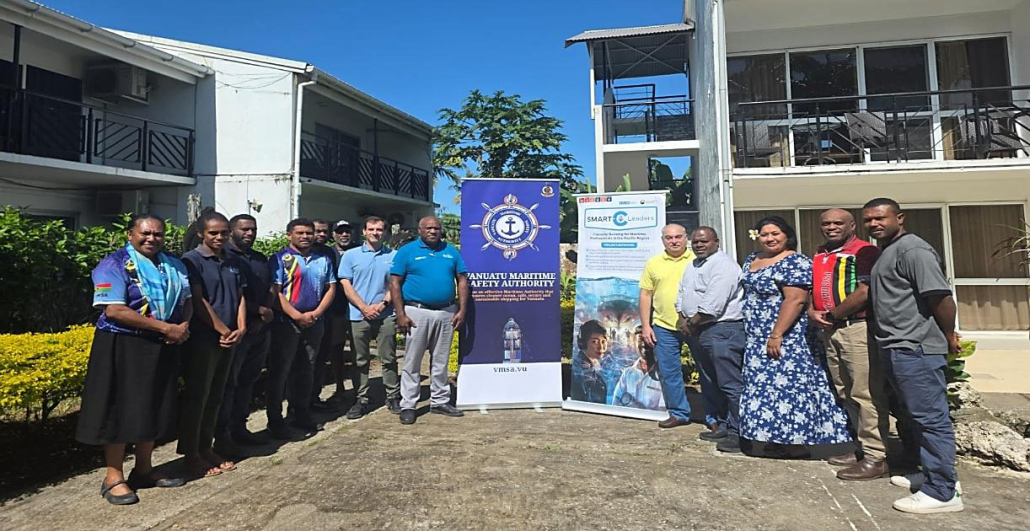
This week, the Vanuatu Maritime Safety Authority (VMSA) hosted a national workshop focused on addressing the findings of the 2017 IMO Member State Audit Scheme (IMSAS) audit. With technical assistance from the IMO and the SMART C-Leaders Project funded by the Republic of Korea this workshop is dedicated to the implementation of Vanuatu’s Corrective Action Plan (CAP), with a particular emphasis on Safety of Navigation.
The project is expected to support Vanuatu in implementing its CAP under IMSAS from 2025 to 2027. By way of background, the 2017 IMSAS audit identified a total of 29 findings, including several observations. It is important to note that the audit occurred during a period of significant institutional transition within Vanuatu’s maritime sector. Just prior to the audit, Vanuatu had established a dedicated maritime safety authority initially known as the Office of the Maritime Regulator (OMR), now operating as the Vanuatu Maritime Safety Authority (VMSA).
Due to the early developing stage and limited institutional capacity at the time, little to no progress was made in addressing the audit findings. As a result, these findings have remained unresolved for the past seven years.
Substantive progress only began in November 2024, when support from the SMART C-Leaders Project enabled the development of a structured Roadmap and Corrective Action Plan. This plan is designed to guide Vanuatu’s efforts from 2025 to 2027 in fulfilling its international obligations under the IMSAS framework and strengthening maritime safety governance. This week’s workshop marks an important step in putting that plan into action.
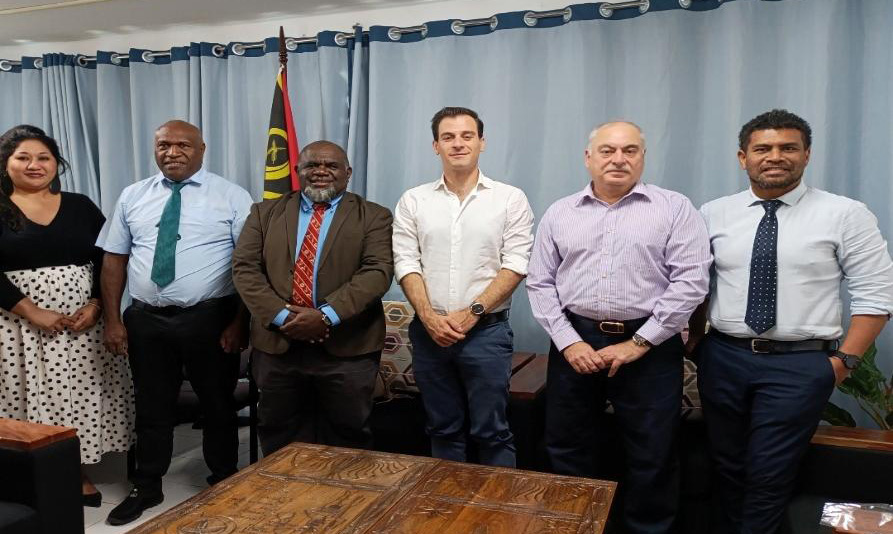
(Pictured here: Mr. Less John Napuati Commissioner of Maritime, Honorable Stephen Felix-Speaker of Parliament, IMO Official-Mr. Gian Milani, Consultant-Mr. Mahesh Alimchandani and VMSA staff)
The key focus of the workshop was on Safety of Navigation, with emphasis on critical areas such as Hydrography, Radio Communications, Search and Rescue (SAR), and Aids to Navigation. Key stakeholders participating in the workshop included the NDMO, CAAV, TRBR, Police Maritime Wing, Ports and Harbors, Office of Ocean Affairs, among others.
The workshop concluded on Thursday; however, the SMART C-Leaders Project will continue to support Vanuatu in implementing its Corrective Action Plan (CAP) through to 2027. It is anticipated that, by then, all findings will be addressed and closed, paving the way for Vanuatu to be fully prepared for its next IMSAS audit, expected in 2028 or 2029.
The team also had a courtesy visit to the Office of the Speaker of the Parliament of the Republic of Vanuatu, the Honorable MP Stephen Felix, who previously served as Vanuatu’s Representative and Ambassador to the International Maritime Organization (IMO) at its headquarters in London. For Vanuatu to be part of this project was initially officiated during his tenure as Vanuatu’s IMO Representative.
The Honorable Speaker warmly welcomed the team and expressed his strong support for the initiative, highlighting its critical importance to Vanuatu’s maritime sector. He commended Commissioner Less Napuati and his team for their commitment to advancing maritime safety and addressing the findings of the IMSAS audit.


